Alibaba Sets an HK$80 Billion AI Share Placement
Alibaba said on 23 August 2026 that it would place new ordinary shares for HK$80 billion, about US$10.2 billion. It earmarked 100% of net proceeds for full-stack AI, including infrastructure.
PromptCrates Editorial
Staff Writer
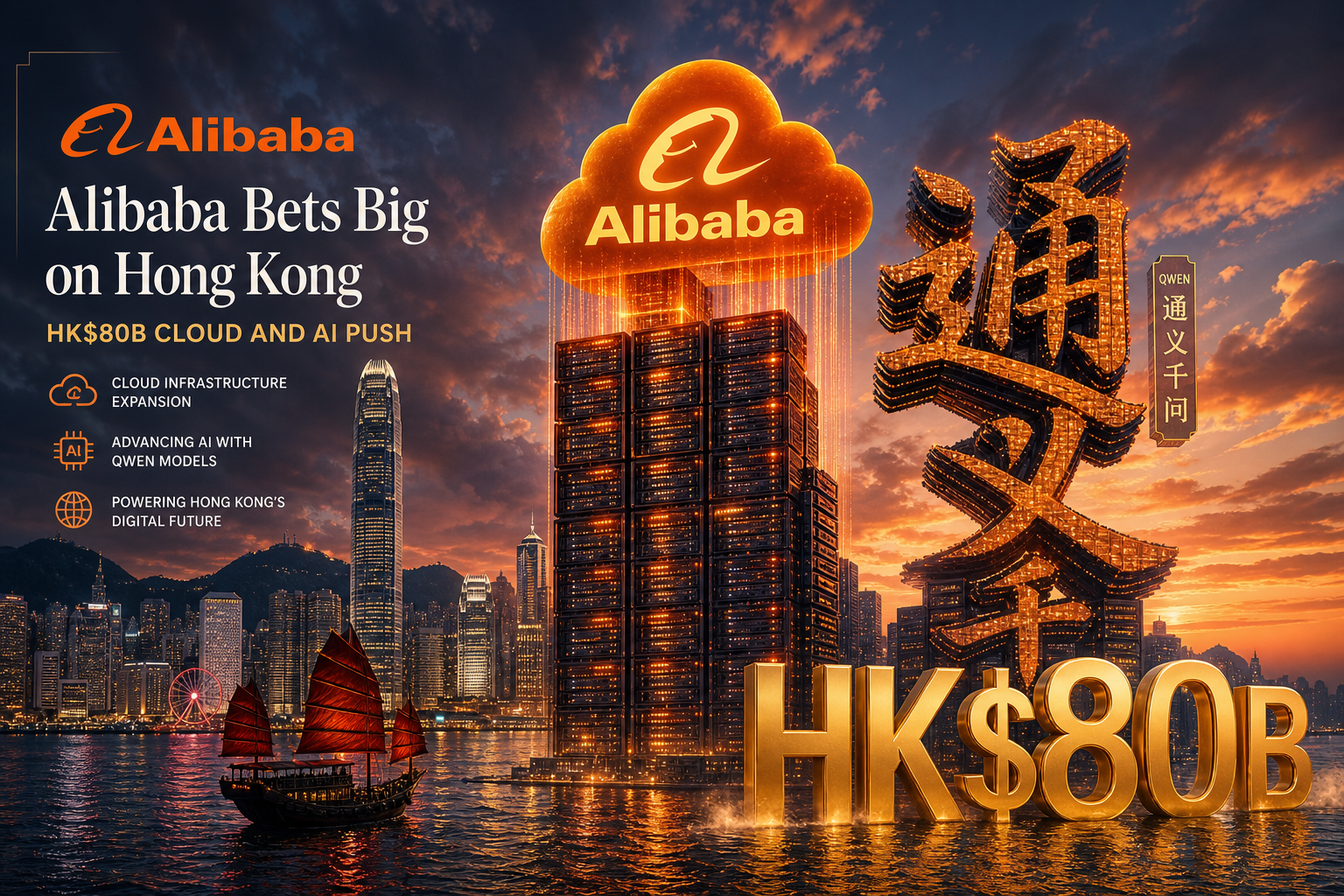
Alibaba said on 23 August 2026 that it would place new ordinary shares for HK$80 billion, about US$10.2 billion. It directed 100% of net proceeds to full-stack AI, including infrastructure.
What the share placement will fund
The official announcement is dated Hong Kong, 23 August 2026. It covers NYSE: BABA and HKEX: 9988 / 89988. Alibaba said the placement is meant to extend its global AI leadership and will fund chips, compute, and Qwen-related model work.
That earmark is the story. Follow-ons often list a menu of uses. This one names a single bucket: full-stack AI. Chips, racks, and Qwen sit in that bucket. Ecommerce working capital does not.
The raise follows a month of aggressive Qwen releases. It is a balance-sheet move behind a model push, not a separate research announcement.
If you already track Nvidia's backing of OpenAI's Ohio campus, keep the two raises in separate columns. Ohio is a power and land story with a named campus. This is a Hong Kong equity sale whose proceeds are reserved for Alibaba's own stack.
How the deal is being sold, and to whom
Shares are being sold only to non-U.S. persons in offshore transactions under Regulation S. The deal is not registered under the U.S. Securities Act. U.S. investors were ineligible because the placement sat outside U.S. registration.
Reuters reported the company planned to sell 710 million shares at HK$112.70, a few percent below the prior close. Bookrunners named in that sourcing include Morgan Stanley, HSBC, UBS, and CICC.
Reuters also described the deal as Hong Kong's largest primary follow-on, and said it sits behind only Alphabet and Intel among the world's largest 2026 follow-ons. Those ranks are Reuters figures, not Alibaba's.
The legal wrapper matters as much as the headline number. A Regulation S sale is a non-U.S. book. Do not write a New York roadshow into the note.
What happened to the stock after pricing
Reuters reported that Hong Kong-listed shares dropped about 8% on 24 August after the sale priced. Investors focused on dilution. That is the market's first read, one session later.
An 8% drop after a primary follow-on is a dilution reaction, not a verdict on Qwen. The company still said every dollar of net proceeds goes to chips, compute, and models. The tape said the new shares were cheaper than the old ones.
The useful pair of numbers is HK$80 billion in, and about 8% off the Hong Kong line the next day. Keep both. Do not collapse them into "the market hated AI."
This capital wave sits next to Stripe's reported OpenRouter purchase only as a reminder that money is still moving into the layer between labs and users. Alibaba is funding its own stack. Stripe is a reported buyer of a router. Different instruments.
How to record the raise in an AI budget skill
Put the filing facts in the wrapper. The skill should say: Alibaba, 23 August 2026, HK$80 billion / about US$10.2 billion, 100% of net proceeds to full-stack AI including chips, compute, and Qwen; 710 million shares at HK$112.70 per Reuters; Regulation S only, no U.S. registration; Hong Kong shares down about 8% on 24 August.
A skill prompt that says "Alibaba is spending on AI" is not enough. Name the ticker pair, the proceeds rule, and the dilution print. Those are the fields a budget owner can check.
Do not treat the placement as a chip delivery schedule. The announcement funds the stack. It does not ship a named accelerator or a named cluster on a date.
Sources
- Alibaba Group announcement on the share placement — Alibaba Group, 23 August 2026
- Alibaba proposes Hong Kong share placement worth $10 billion — Reuters, 23 August 2026